Tag Archives: books

A Late-Summer Reading Wrap-Up

Christi Hegstad October 5th, 2022

I’ve just finished reading book #77 of the year and realized I haven’t posted a wrap-up in a while! Below are some of my recent nonfiction reads, along with a two-sentence description for each:

The Power of Regret by Daniel Pink

A thought-provoking look at the role regret can play in our lives, both positively and negatively. I particularly appreciated the description of four different types of regret and the section offering suggestions on what we can do about them.

The Power of Ritual by Casper Ter Kuile

Great ideas for bringing meaning and sacredness into any activity, particularly things you’re already doing rather than adding more to the to-do list. I really enjoyed the conversations around reading, prayer, connecting with nature, and meaningful conversation.

How To Read Literature Like A Professor by Thomas Foster

An interesting look at how to read more critically, including looking for deeper meanings/symbolism, considering the impact of word choices, thinking about the time period the book was written, and more. I gathered a few helpful nuggets to hopefully enhance my individual book reviews.

This Book Is Anti-Racist by Tiffany Jewell

An engaging resource written for youth but equally impactful for adults! I appreciated the descriptions of anti-racism and non-racism, the differences between calling in and calling out, and numerous specific actions we can take to make a difference.

Why Bother? by Jennifer Louden

I picked this up after randomly hearing an interview with the author and immediately read it in a matter of days! A powerful look at turning a potentially negative question – why bother? – into a more purposeful one that asks what truly is worth bothering about, then focusing our attention there.

How To Change by Katy Milkman

An excellent blend of insight on habits, confidence, goal achievement, grit, and more, all supported by extensive empirical research. Fantastic practical solutions/suggestions along with incredibly compelling stories and examples; I have put much of this into practice since reading!

The Joy Of Movement by Kelly McGonigal

An inspiring and research-backed look at the gift of movement, including its connections to community-building, nature, music, service, and beyond. I downloaded the audiobook on my sister’s recommendation and thoroughly enjoyed listening while walking!

If you’d like further information on any of these, or are interested in my fiction reads, just let me know in the comments below! Also, be sure to sign up for my newsletter, as upcoming issues will share my favorite books of the year (two of these listed here will almost certainly appear on that list) as well as my favorite nonfiction books of all-time!

What book have you enjoyed lately?


May ’22 Reading Wrap-up

Christi Hegstad May 26th, 2022

I have enjoyed a massive (for me) reading month, thanks in large part to this helpful spring formula:

Better weather + longer outdoor walks + audiobooks = more books completed than usual!

Plus add several hours in the car and there you have it.

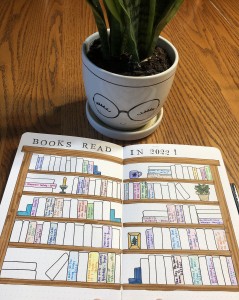
In May, I finished ten books – five fiction and five nonfiction – bringing my total for the year so far to 41 books. I track them in my reading bullet journal (aka, bujo), writing a brief snippet for each as well as listing all of them on my ‘bujo bookshelf’:

2022 Bujo Bookshelf as of May

Pretty high-tech, eh? 🙂

Below you’ll find brief commentary on each of my May reads, fiction followed by nonfiction, plus which books turned out to be my favorites of the month!

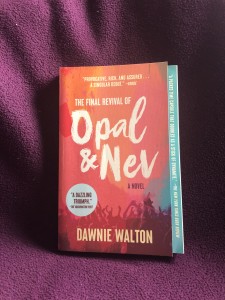
Opal Nev book

The Final Revival of Opal & Nev by Dawnie Walton

I had the pleasure of meeting Dawnie Walton recently at the Des Moines Book Festival, shortly after her book was longlisted for the Women’s Prize for Fiction, and there is something extraordinary about reading a book that the author has just signed for you! I listened to much of this one as well, my first experience with a full-cast narration – it was like a play being performed in my headphones. I loved the story, the narrative arc, the character development, and my entire reading experience with this one!

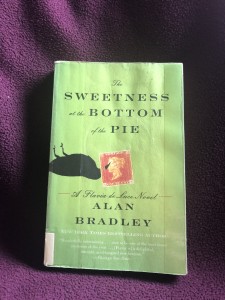
Sweetness Bottom Pie book

The Sweetness At The Bottom Of The Pie by Alan Bradley

This is the first in a ten-part (I believe) mystery series starring the bright and precocious Flavia de Luce, an 11-year-old chemistry buff and, as it turns out, detective. This was a fun read and I adored the style and voice of the audiobook narrator, Jayne Entwistle. Set in the 1950s in rural England (the setting was wonderful!), this would probably qualify as a ‘cozy mystery.’

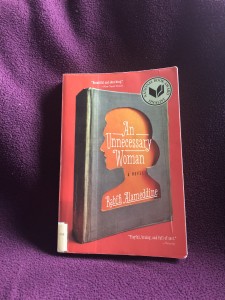
Unnecessary Woman book

An Unnecessary Woman by Rabih Alameddine

Part of my family heritage is Lebanese, so I am often on the lookout for books written by Lebanese authors and/or set in Lebanon. This novel features a 70-something woman living alone in Beirut, addressing common life experiences (relationships, work, friendship, etc.) in a not-always-common way or environment. A thoughtful story, and beautifully crafted on a sentence level; one of several that I tabbed, for example: “No nostalgia is felt as keenly as nostalgia for things that never existed.”

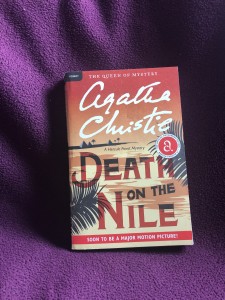
Death Nile book

Death On The Nile by Agatha Christie

Somehow, I never read an Agatha Christie novel until a year or so ago, even though she has a gigantic backlist and has been hailed for decades as a stellar mystery writer. (Now that I think about it, I believe I picked up my first Christie novel shortly after reading The Mystery of Mrs. Christie by Marie Benedict, which I thought was excellent.) I enjoyed the closed circle setting and the red herrings along the way, as well as the sense of place and the ‘old-fashioned’ (aka, pre-cell-phone) feel.

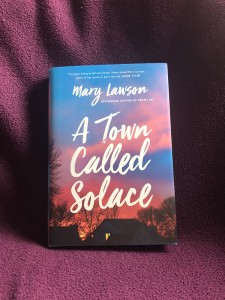
Town Solace book

A Town Called Solace by Mary Lawson

I randomly heard of this one from a ‘booktuber’ (someone with a book-related YouTube channel) – The Book Bully – who often reads similarly to me, and after her description I could not get it out of my mind. I picked it up soon after, finished it in a matter of days, and it has become one of my favorite books of the year so far! A beautifully written story (with an equally beautiful cover) touching on topics of family, grief, friendship, loss, and forgiveness. I loved this one.

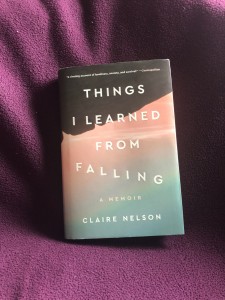
Things Learned Falling book

Things I Learned From Falling by Claire Nelson

An insightful account of one woman’s experience surviving alone for several days, unable to move her injured body, after falling during a hike. Both inspiring and terrifying, the grit, optimism, and mental strength displayed in this story amazed me. (I had to keep reminding myself, “She wrote this book – so she clearly survived!”) This came highly recommended by my daughter, an avid hiker herself.

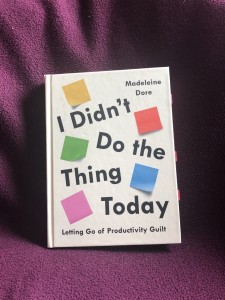
Didnt Do Thing book

I Didn’t Do The Thing Today by Madeleine Dore

I’ll admit it: the title completely drew me to this one! This book reminds us that productivity isn’t just about completing our to-do lists, and success doesn’t revolve around getting the most done. Based on numerous interviews the author held with a wide range of professionals, I appreciated the aforementioned reminders, the look at how routines can both serve and ‘run’ us, and the deeper questioning around how to actually define productivity for ourselves.

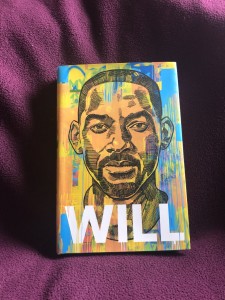
Will Smith book

Will by Will Smith with Mark Manson

An interesting account of the life of Will Smith, from childhood to present day. I appreciated his openness, particularly in the first half of the book, and particularly around his relationship with fear. I struggled with several aspects of the book too, in part because my long library hold came in just shortly after his recent public violent outburst. Taken as a case study of work ethic and self-confidence, I walked away with a few insightful nuggets; also, the audiobook is incredibly well-produced.

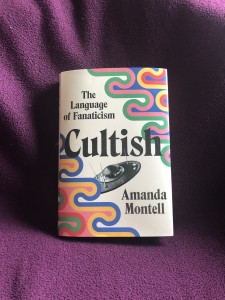
Cultish book

Cultish by Amanda Montell

This well-researched, intriguingly presented book provides a fascinating look at the power of language in creating cult and cult-like environments. Montell, whose father belonged to a cult for a time, looked at everything from Jonestown to fitness fads to multi-level marketing organizations and how each uses language, among other factors, to create a cult-like atmosphere – often to devastating results. I appreciated her perspectives on how people – including educated, capable, free-thinking adults – can fall prey to cults.

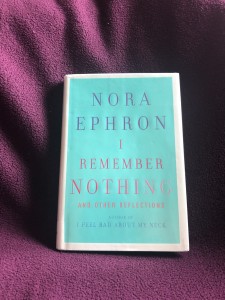
Remember Nothing book

I Remember Nothing: And Other Reflections by Nora Ephron

I’ve read a few of Ephron’s essay collections over the years and she nearly always makes me laugh with her wise and witty life observations. She somehow manages to be both caring and irreverent all at once – like she always wants to do her best but also knows not to take herself too seriously. This collection covers everything from family and friendship to the evolution of email to life in New York to aging. Funny, relatable (in many ways), and thoroughly enjoyable.

While I rated most of this book stack quite highly, my favorite fiction read for May was A Town Called Solace, and I will definitely be looking into more of Mary Lawson’s works. My favorite nonfiction was a tie between Things I Learned From Falling and Cultish – both exceptional for very different reasons!

Do you have questions or opinions on any of these? What’s the best book you read in May? Share your thoughts below!

Christi Hegstad, PhD, PCC, is the Practical + Purposeful Coach for Achievers! Contact us to inquire about coaching possibilities to help you create a meaningful career and purposeful life.


April ’22 Reading Wrapup

Christi Hegstad April 27th, 2022

Here we are again, approaching the end of another month! I read some excellent books in April, rating most of them four out of five stars or higher.

Primarily due to several library holds coming in all at once (that joyful dilemma!), I read more fiction (five) than nonfiction (three) this month. Some were due back to the library before I could take a picture of the entire stack, which is why you see a few ‘place holders’ in the photo above; you’ll find a cover photo of each below.

A few thoughts on each book, starting with the nonfiction!

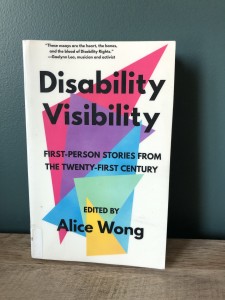
Disability Visibility book - April 22 - Wong

Disability Visibility by Alice Wong

A thoughtful collection of essays written by a variety of people with disabilities, sharing their life experiences and insights. I really appreciated the diverse voices, the challenging of assumptions, and the reminder that not all disabilities can be ‘seen.’ I also valued the many ideas offered for creating a more accessible and inclusive world, and I felt so inspired by the actions the contributors have taken to raise awareness and prompt change. I read this both in paper and audio formats.

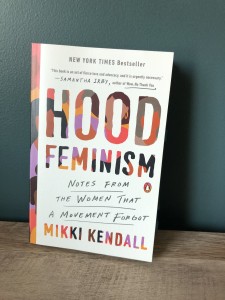
Hood Feminism book - April 22 - Kendall

Hood Feminism by Mikki Kendall

Subtitled ‘Notes From The Women That A Movement Forgot,’ Kendall discusses the importance of feminism as well as the many ways people of color, LGBTQ+, and other marginalized groups have not always been included in the movement. So much important information in this resource on topics ranging from housing to food insecurity to healthcare to victim-blaming, and backed by statistics and examples. I tabbed many pages and, in reviewing my notes, noticed I had written ‘eye-opening’ multiple times – a fair description of my reading experience!

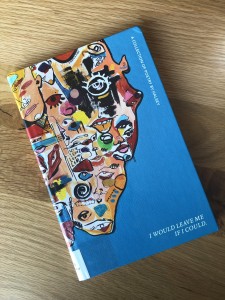
Leave Me If Could book - April 22 - Halsey

I Would Leave Me If I Could by Halsey

April is National Poetry Month, and after hearing about singer/songwriter Halsey’s poetry collection on a podcast recently, I decided to pick it up from my local library. She offers a unique structure to her poems, and while each can easily stand alone, I also felt a thematic element running through the collection. I am not super familiar with Halsey’s music, but the next time I hear one of her songs on the radio I’ll be listening more closely to her lyrics!

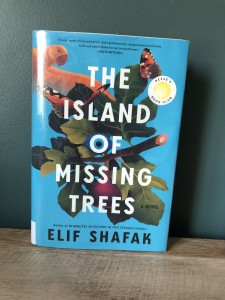
Island Missing Trees book - April 22 - Shafak

The Island of Missing Trees by Elif Shafak

I have been intrigued by the Women’s Prize For Fiction the past couple of years, so after the longlist was announced for 2022, I decided to dive into a few of the selections that I hadn’t previously read. So far, Shafak’s novel is my favorite among them; I adored her beautiful prose, well-developed characters, and compelling story. She touched on so many topics, several of them difficult or heartbreaking, and masterfully interwove various threads together throughout the novel. I never thought a fig tree would become one of my favorite characters in a novel – but never say never!

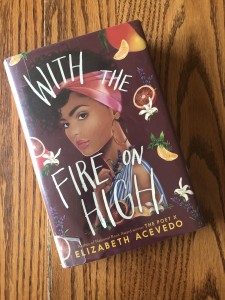
Fire On High book - April 22 - Acevedo

With The Fire On High by Elizabeth Acevedo

This is my second book by Acevedo and she has quickly become a must-read author for me. I loved how the protagonist – a teenage mother finishing high school and making plans for her next chapter – was strong, smart, kind, and in pursuit of her personal dreams while caring beautifully for her young daughter. Acevedo’s writing is stellar and I jotted down many lines from the book; among my favorites: “Trust. Yourself, mainly, but the world, too. There is magic working in your favor.”

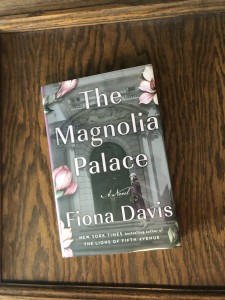
Magnolia Palace book - April 22 - Davis

The Magnolia Palace by Fiona Davis

As a longtime fan of Fiona Davis’ historical fiction, I placed her latest release on hold as soon as I heard about it. Definitely worth the wait! I enjoyed the dual timelines as well as how the stories intersected, a format Davis has mastered. Her hearty heroines kept me turning the pages quickly; I finished this one in just two days, in fact. I’ve read her entire backlist and I am sure I’ll continue reading everything she publishes.

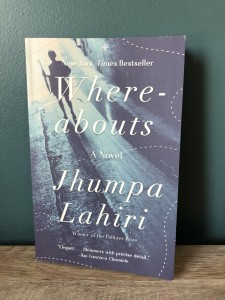
Whereabouts book - April 22 - Lahiri

Whereabouts by Jhumpa Lahiri

I’ve heard Jhumpa Lahiri mentioned in the literary world for quite some time but had not yet read any of her works until this month. One book in and I feel compelled to read the rest! Her writing is sparse and precise; I get the feeling that each word is chosen with care, and I love it when a novel makes me thoughtfully consider and appreciate the craft of writing. I went between the audio and paper versions of this one and thoroughly enjoyed it in both formats.

Maid Book - April 22 - Prose

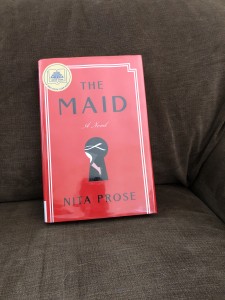
The Maid by Nita Prose

The Maid by Nita Prose – not to be confused with the also-popular Maid by Stephanie Land – is a mystery/thriller that I have seen everywhere since its release earlier this year. While this isn’t necessarily my go-to genre, the premise of this one intrigued me enough to put it on hold at the library. What a ride! The story took a number of twists and turns along the way, and I found it compulsively page-turning. I also really liked many of the central characters, which makes such a difference when reading.

That’s my April wrap-up! Have you read any of these books? What did you think? Share your thoughts – or your latest reads – below!

Christi Hegstad, PhD, PCC, is the Practical + Purposeful Coach for Achievers! Contact us to inquire about coaching possibilities to help you create a meaningful career and purposeful life.

March ’22 Reading Wrap-up

Christi Hegstad April 6th, 2022

Welcome to a potential recurring feature on my blog: My monthly reading wrap-up!

I read seven books in March – three fiction, four nonfiction – bringing my total to 23 for the year so far. Below, I offer a few thoughts on the four nonfiction reads of the month. If you enjoy hearing about these, please respond to my question at the end of this blog – thank you!

Anthropocene Reviewed book Green

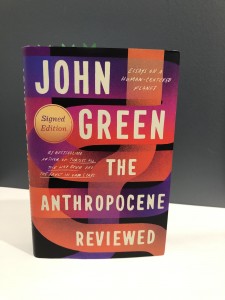
The Anthropocene Reviewed by John Green

I’ve read some of Green’s young adult books, such as The Fault In Our Stars and Looking For Alaska, but this was my first encounter with his nonfiction. (Side note: This was also my first encounter with the word ‘anthropocene,’ which essentially means the current geologic age.)

The premise is unique: Through a series of essays, Green examines a number of phenomena from our current anthropocene – from teddy bears to Canada geese to various foods and pop culture items. He shares a creative and well-thought-out ‘review’ of each, then assigns a 1 to 5 star rating.

I thoroughly enjoyed this collection, particularly appreciating Green’s realistic-but-optimistic outlook as well as his openness with his own mental health.

Day World Came Town book Defede

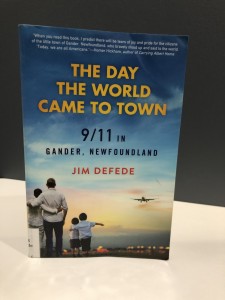
The Day The World Came To Town by Jim Defede

We all likely have memories (or, for the younger set, have heard experiences) of September 11, 2001. This book, however, opened my eyes to an experience from that time that I was not familiar with.

Defede, a journalist and investigative reporter, shares the story of the numerous overseas planes that were midflight when suddenly air traffic in the U.S. was shut down and they had to reroute. Many of them landed in Gander, Newfoundland, nearly doubling the population of the small Canada town for the next several days. The way the people of Gander responded was incredible! Within moments, the community came together with donations of food, bedding, and essentials – as well as open arms and listening ears.

If you’re looking to restore your faith in humanity, I recommend this book.

Braiding Sweetgrass book Kimmerer

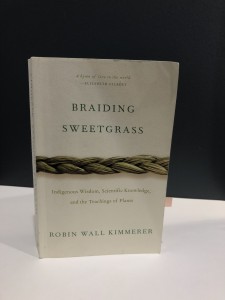
Braiding Sweetgrass by Robin Kimmerer

I read this profound work amidst the onset of spring and felt renewed in more ways than I can explain! Kimmerer writes from her perspectives as a scientist, professor, mother, and member of the Citizen Potawatomi Nation. The way she weaves her words and experience in Braiding Sweetgrass is an absolute gift.

In addition to beautiful stories and Indigenous wisdom, Kimmerer offers so much practical advice for healing our planet. Upon closing the book, I pulled out my journal and made a list of simple commitments to make a bigger difference. I finished this book several weeks ago and still think about it pretty much daily!

I also recommend the audio version of this book, which is read by the author.

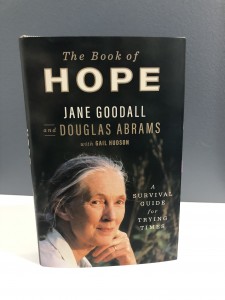
Book Of Hope Goodall Abrams

The Book of Hope by Jane Goodall and Douglas Abram

“Probably the question I am asked more than any other is: Do you honestly believe there is hope for our world? For the future of our children and grandchildren? And I am able to answer truthfully, yes.”

With these words, Jane Goodall sets the tone for The Book Of Hope, an insightful resource from a true world-changer. At almost 90 years old, Goodall has lived through countless experiences that could have diminished her hope. Yet with fortitude and wisdom, she continues to reach millions with her messages of care and action.

If you enjoyed The Book Of Joy, the first book in the Global Icons Series (you can read my review here), you will love The Book Of Hope! I could not put this one down.

Friends, I am considering starting a YouTube channel where, among other things, I would briefly recap the books I read each month. Would this be of interest to you? If so, would you prefer just nonfiction, or both fiction and nonfiction? Please share your thoughts below or on LinkedIn!

Christi Hegstad, PhD, PCC, is the Practical + Purposeful Coach for Achievers! Contact us to inquire about coaching possibilities to help you create a meaningful career and purposeful life.

My Favorite Books of 2021!

Christi Hegstad November 18th, 2021

Haven’t joined the ASPIRE Success Club yet? Click here to explore books, growth, and goals with me all year long!

Readers, bibliophiles, and lovers of personal + professional growth, welcome to the post you ask me for each year as well as the one I struggle-yet-love to write!

I’ve read over 90 books so far this year, and narrowing down my top 10 has proven incredibly difficult. So difficult, in fact, that I just won’t do it! I’m offering my top 12 instead. 🙂

still life book and a cup of tea in the living room

The Fine Print

Before we dig into the books, please note a few details:

* These are books I read in 2021 – not all were published in 2021.

* This list offers my nonfiction favorites; let me know if you’d like to see my fiction favorites as well!

* I fully recognize that I may still read books that could make this list. (In fact, I am 30 pages into one that already feels like a contender!) If that occurs, I’ll share them here on the blog and/or with my email community.

OK, enough chit-chat. Let’s get to the list!
Bookshelf

The Nonfiction Favorites

In no particular order, here are my 12 favorite nonfiction books this year! (So far.)

Chatter by Ethan Kross

I just read this book last month and instantly knew a) it would make my list of favorites, and b) we would explore its concepts more deeply when we discuss mental strength in the ASPIRE Success Club next year. Kross has created a practical, purposeful, backed-in-science resource for managing the chatter in our minds. I particularly appreciate the many tools he offers throughout, then how he presents them in an easy-to-reference toolkit at the back of the book. You can hear me talk more about this one in a recent video on Facebook.

The Library Book by Susan Orlean

Orlean is a master at exploring a topic from every angle, conducting extensive research, interviewing loads of people, and pulling everything together into a compelling story that keeps you turning the pages to find out what happens next. This book centers around the devastating fire of the Los Angeles Public Library in 1986 while also digging into the evolution of libraries, the power of books and literacy, and the many behind-the-scenes ways libraries and librarians enrich our communities. I love the themes of resilience and the passionate pursuit of ‘what could be’ offered throughout this incredibly well-written book.

Burnout by Emily Nagoski & Amelia Nagoski

By the time I wrapped up the first chapter, I could already call this a life-changing book. An excellent, evidence-based resource about navigating and preventing an all too common, yet often misunderstood, experience: burnout. The authors’ insights on closing the stress cycle, along with the helpful examples they offer, have made a profound difference in my own life this year as well as in my work with coaching clients.

Crying In H Mart by Michelle Zauner

For I believe the first time ever, nearly half of my top picks are memoirs / essay collections; I plan to post a blog about the reasons behind that soon. Zauner’s description of her family, heritage, and navigating her mother’s terminal cancer diagnosis was thoughtful, raw, and incredibly intimate. She touches beautifully – and in many cases, heartbreakingly – on the topic of grief, and I empathized with so much of her experience. Probably my most tender read of the year.

Shoe Dog by Phil Knight

A fascinating account of, in general, the mindset and grit required to build a successful company, and specifically, how Knight employed these traits when founding Nike. I appreciate his honest depiction of the dizzying highs and devastating lows of entrepreneurship and all that goes on behind the scenes along the way; I’ve recommended this book to non-business owners as well, however, and his lessons still apply. I was so enthralled, I whipped through the 13-hour audiobook in a matter of days.

Set Boundaries, Find Peace by Nedra Glover Tawwab

In my early adulthood, I often thought a boundary was essentially a metaphorical brick wall, with no way to get in or out. This idea is, of course, wildly off base, and Tawwab’s new book addresses the topic beautifully and helpfully. If you could benefit from setting healthy boundaries in your work or life, this highly accessible resource from a licensed therapist may serve as a great starting point. Practical solutions, bullet-pointed ideas, and relatable examples – I refer back to my highlights in this book quite regularly.

Open book and yellow tea mug with warm scarf

I Miss You When I Blink by Mary Laura Philpott

I randomly picked this off of the Libby (library audiobook app) shelf knowing nothing about it – not even whether it was fiction or nonfiction. Turns out it’s a delightful collection of essays about everything from living as a Type A personality, to adulting effectively (or at least attempting to) in current times, to adapting one’s definition of success – and that it may not always mean coming in first place. As a Type A, enneagram 3 achiever myself who works primarily with achievers, I could relate to so many of Philpott’s hilarious, yet resonant, stories.

The Lazy Genius Way by Kendra Adachi

I’ve been a longtime fan / teacher of decluttering and have read tons of books on the topic, so nowadays I feel like most of what I read is refresher – not necessarily anything new. Adachi’s book thus surprised me, as she offers so many innovative ways of approaching this very familiar topic. She promotes being ‘a genius about things that matter and lazy about things that don’t,’ and I found her blend of practical ideas, along with questions for figuring out what will actually work for the individual reader, to be outstanding.

I’m Still Here by Austin Channing Brown

This well-written memoir offers an insightful look into the author’s experience as a Black woman in America, sharing stories from childhood all the way to now expecting her first child. I love memoirs that provide a look through a lens I have not experienced myself, and Brown does this with an honesty and graciousness that I firmly appreciated. I found this book incredibly eye-opening, and it has continued to prompt thought-provoking discussions since reading it early this year.

Think Again by Adam Grant

I have read and enjoyed several of Adam Grant’s books in the past, but Think Again completely blew me away – it’s in a league of its own when it comes to our thoughts, unlearning, nuance, and perspective. I’ve already written extensively about this book; you can learn more here and here for starters, and check out my video review on Instagram.

Uncomfortable Conversations With A Black Man by Emmanuel Acho

How often do we not ask a question for fear of appearing uninformed or of being unintentionally offensive? In this book, Acho’s overarching theme shines through: Let’s talk about things. Each section offers questions that Acho answers, clearly and kindly, from his perspective as a Black man in the U.S. He closes every chapter with additional resources to support our ongoing learning on important topics like communication, empathy, and antiracism.

Did I Say That Out Loud? by Kristin van Ogtrop

I laughed out loud more with this book than any other this year (just peek at the cover!). At the same time, I could relate so deeply to the many other emotions and inner thoughts van Ogtrop expressed. She is relatable, witty, and a keen observer of life; I particularly loved her commentary on relationships, parenting, and self-doubt. I closed the book wanting to give the author a big hug – both for all she’s experienced and for her grace in reminding me that I’m not alone.

Have you read any of these books?

Have you added any to your want-to-read list?

What’s the best book you’ve read this year?

I love talking books – let’s keep the conversation going below!

Now enrolling for the 2022 ASPIRE Success Club – join today!
Christi Hegstad, PhD, PCC, is the Practical + Purposeful Coach for Achievers!  Join our email community for coaching tips, book recommendations, and more!

Think Again: Book Review + Takeaways

Christi Hegstad August 4th, 2021

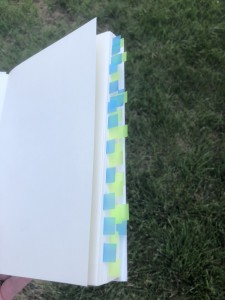
This blog has taken me ages to write – not because I don’t know what to say, but because I basically want to share every word from Think Again with you! I mean, I actually ran out of page flags while reading and annotating:

Think Again book page flags

I’ve enjoyed Grant’s earlier work, but I am blown away by how much value I have gained from Think Again. I am applying its lessons everywhere and continuing to delve deeper into the topics he presents. This book will definitely stick with me long-term!

Overview

Essentially, Think Again encourages us to practice the skill of unlearning, rethinking, and challenging ourselves to not believe every thought we have. Grant states:

Every time we encounter new information, we have a choice. We can attach our opinions to our identities and stand our ground in the stubbornness of preaching and prosecuting. Or we can operate more like scientists, defining ourselves as people committed to the pursuit of truth – even if it means proving our own view wrong. (p76)

Grant’s writing is engaging, thought-provoking, and filled with both quantitative and anecdotal evidence to support his arguments. He shares examples from sports, healthcare, academia, social justice efforts, and more; I have looked up further details on many of the individuals he highlights as they remind us how one person has the power to make a HUGE impact!

Think Again truly feels like a book with something for everyone.

Top Takeaways

As I mentioned, narrowing down my top lessons has proven challenging – I feel like I’ve highlighted about every other sentence! But to get us started, a few standout themes:

1. Detachment requires conscious effort. (And it’s worth it.) 

Detachment – what I would summarize as the art of letting go – does not necessarily come easily or naturally to us. We confuse our thoughts with absolute fact, we connect our identity to our opinions, we worry about what others will think if we change our stance or go against the grain.

And we definitely don’t want to feel – or appear – that we’ve been wrong about something our entire lives.

Being able to open ourselves to new thoughts, however, can actually help us become mentally healthier. We can detach our present self from our past self, viewing it as growth instead of placing judgment on how foolish we once were. “It’s a sign of wisdom to avoid believing every thought that enters your mind,” Grant offers. “It’s a mark of emotional intelligence to avoid internalizing every feeling that enters your heart.”

Changing your beliefs over time doesn’t always mean you were wrong or that you’re wishy-washy. It simply means you’ve gained more information, experience, or insight – and have evolved your thinking as a result.

2. We can’t necessarily change other people – but we may be able to help them open their minds.

Grant talks about common tendencies when it comes to our beliefs: We may focus our energy on preaching about all the reasons we’re right, for example, and/or expend our effort telling others all the ways they are wrong.

These strategies, however, can have the opposite effect than we hope: “When we’re trying to persuade people,” writes Grant, “we frequently take an adversarial approach. Instead of opening their minds, we effectively shut them down or rile them up.”

A more effective approach involves enlisting the qualities that scientists tend to adopt: curiosity, humility, collaboration, listening, a willingness to be proven wrong. The examples he offers in Think Again, such as a Black musician who has used the art of conversation to help white supremacists let go of their hatred, are utterly profound.

3. ‘Confident humility’ allows us to honor how far we’ve come while acknowledging how much we’ve yet to learn.

The phrase ‘confident humility’ essentially means believing in yourself while also recognizing you still have more to learn. This blend of security plus room for growth allows us to develop as stronger leaders, achievers, and true difference-makers.

Grant frames this concept using examples of the armchair quarterback and the impostor: When we think we already know everything, as in the case of the armchair quarterback, we leave no room for new ideas or information. Yet when we don’t give ourselves credit for what we do know, like the impostor, we undervalue our worth and hold ourselves back from our full potential. (An interesting side note: Grant points out that what we commonly refer to as impostor syndrome “seems to be particularly pronounced among high achievers.”)

Confident humility, as both a phrase and a concept, has resonated deeply with me and with many of my coaching clients as well. We can believe in ourselves while acknowledging we still have more to learn; we can honor our strengths while still recognizing – but not being taken down by – the fact that we also have weaknesses.

I wrote a few more thoughts about confident humility here.

I’ve written other takeaways here – oh, and here, too. (I’m telling you, I can’t get enough!)

Closing Thoughts

It’s rare to come across a book I feel is applicable to just about anyone, but Think Again is such a book. I’d especially recommend it to leaders, educators, and those who often find themselves in negotiation conversations (ie, sales professionals, mediators, change-makers). In addition, this would be a valuable resource for anyone in the business of helping others improve their quality of life – physicians, counselors, healers, and the like – particularly the sections on motivational interviewing.

But in all honesty, Think Again could improve conversations in nearly any household or relationship, as well as in the overall realm of personal growth. His points around meaning, psychological safety, arguing effectively … I could go on and on.

I’ve read over 60 books so far this year, and Think Again is an absolute standout among them. Pick it up, devour its wisdom, and let me know your takeaways!

Christi Hegstad, PhD, PCC, is the Practical + Purposeful Coach for Achievers!  Join our email community for weekly coaching tips, free resources, book recommendations, and more!

* Think Again was written by Adam Grant and published by Viking, an imprint of Penguin Random House LLC. Copyright © 2021.

Effortless: Book Review, Takeaways, + Application

Christi Hegstad July 15th, 2021

Greg McKeown made quite a splash with his first book, Essentialism, which helped us decide what matters most and then focus our energy in those few areas.

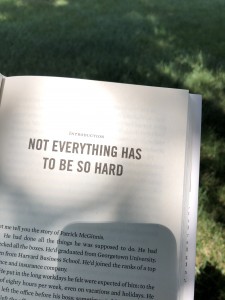
With his latest release, Effortless, McKeown offers a ‘next step’ in the essentialism journey. He opens with the line, “Not everything has to be so hard,” then spends the next 200 or so pages providing tips, strategies, and real-life examples for living with greater ease.

Not problem-free, of course, but perhaps with a bit more lightness and freedom than we currently feel.

Below you’ll find my top takeaways, overall impressions, and to whom I’d recommend this book.

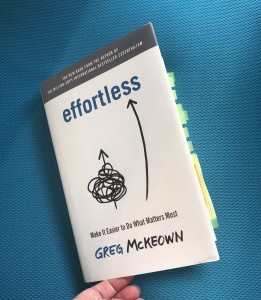
Effortless Book Not Everything Hard

Takeaways

1. Reframe your questions.

As a coach, my profession is built in large part on this principle, and I appreciate how McKeown addresses this. Instead of feeling overwhelmed, getting stalled, or asking why everything is so hard, he poses different questions:

“What if this could be easy?” (p27)

“What if all those steps I’d assumed this task entailed were not in fact required steps at all?” (p33)

“What are the minimum steps required to complete this?” (p118)

Yes, we need to deal with complex and difficult things. But maybe they don’t need to be as difficult as we tend to make them, and McKeown’s approach can help us rethink these situations.

2. Know exactly what you’re moving toward.

“Define what done looks like” is the title of chapter 6. While this may seem obvious, how often are we truly crystal-clear about what we’re heading toward?

“If you want to make something hard, indeed truly impossible, to complete,” writes McKeown, “all you have to do is make the end goal as vague as possible.”

I’ve long said vague and fuzzy goals leads to vague and fuzzy actions – or no action at all. This chapter, which is only about six pages long, packs a powerful punch regarding clarity, focus, and determining what ‘done’ looks like.

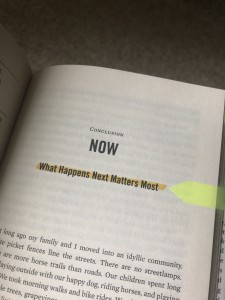
Effortless Book What Happens Next Matters Most

3. What you do next is what counts.

Years ago, while at my children’s middle school, I took a photo of a quote on the wall, attributed to Buddha: “Each morning we are born again. What we do today is what matters most.” (Incidentally, if you scroll through my Instagram feed, you’ll see this as one of my first-ever posts, too!)

The final chapter in Effortless speaks to this concept beautifully.

Here, McKeown describes a health issue his family is navigating – one without clear answers or known outcomes. He vulnerably shares how, during a particularly challenging period, they had to choose, each day, whether they would obsess with worry or focus on what they could do, what they could control.

The question / choice he poses here: “Do I choose the heavier or the lighter path?”

Effortless Book Tabs Highlights

Overall Impression and Recommendation

I read a ridiculous amount in the personal + professional development space. Likely for that reason, Effortless didn’t startle me with anything wildly new or earth-shattering – however, the way McKeown presents the information and the examples he offers made this an incredibly worthwhile read. Perhaps you can tell from the above photo, I tabbed and highlighted a lot!

I’d recommend this book to those who loved Essentialism (I do recommend reading that one first, as it will provide a solid foundation) and to those feeling like things are harder than they need to be.

I also believe McKeown’s questions and tips can benefit business owners, leaders, or anyone who feels bogged down by the sheer number of to-do’s required on any given day.

Questions? Thoughts? Takeaways from your own reading experience? Share below or on LinkedIn, Instagram, or Facebook!

Christi Hegstad, PhD, PCC, is the Practical + Purposeful Coach for Achievers!  Join our email community for weekly coaching tips, free resources, book recommendations, and more!
 

Favorite Nonfiction Reads of the Year (So Far!)

Christi Hegstad July 2nd, 2021

Looking for some reading material this holiday weekend? I’ve read a bunch of books so far this year and these three top my nonfiction list for the first half of 2021:

Shoe Dog is the story of how Nike came into existence. Knight’s examples of dedication, persistence, and the importance of believing in what you’re doing were wrapped up in some extraordinary stories along the way. Great for entrepreneurs, leaders, salespeople, and those building something from scratch.

The Library Book read like a novel to me – it starts with the 1986 fire of the LA Public Library and from there shares the myriad ways books, libraries, and librarians so profoundly serve our lives. I loved the way the author demonstrated the often-unsung impact libraries have in our communities. Excellent for book lovers, leaders, and those looking for creative examples of community impact.

I’ve read a ton on the topic of burnout, but the well-titled book Burnout took this body of knowledge to a whole new level. From the concept of ‘closing the stress cycle’ to the role things like body image and societal expectations play in burnout, I highlighted something on nearly every page of this one. A terrific read for anyone feeling the tendencies of burnout, as well as coaches and other professionals who work with people navigating this ever-prevalent topic.

Have you read any of these – or does one jump out at you? What other excellent books have you read so far this year? Please share any and all below!

Christi Hegstad, PhD, PCC, is the Practical + Purposeful Coach for Achievers!  Join our email community for weekly coaching tips, free resources, book recommendations, and more!
Burnout: Book Review, Takeaways, + Application

Christi Hegstad June 23rd, 2021

When I wrote about my experience with burnout two years ago, I received more feedback than with any other article I’d written in years. For better (since we knew we weren’t alone) or for worse (since burnout was clearly so prevalent), that article opened up a dialogue – and a focus within my coaching work – that has continued to this day.

So when I recently heard of a book on the topic that was hailed as evidence-based as well as practical, I jumped right in.

And when I say that I had an aha moment – and a potentially life-changing one at that – within the first chapter of Burnout by Emily Nagoski and Amelia Nagoski, I am not exaggerating! This book has forever changed the way I think about stress, its often-hidden sources, and innovative ways we can minimize and help prevent burnout.

Read on for my three top takeaways from this insightful book:

1. Close your stress cycle. Every day.

Imagine you’re being chased by a lion. If someone captures the lion and takes it away, you won’t immediately feel calm, peaceful, and ready to return to your nightly crossword puzzle. It’s going to take a while for your heart rate to slow down and your mind to clear enough for you to focus on anything other than lion-induced thoughts.

Same goes for other, more likely, stressors that we experience on a regular basis. “Just because you’ve dealt with the stressor,” write Nagoski and Nagoski, “doesn’t mean you’ve dealt with the stress itself.”

We have to close the stress cycle. And we must do this on a daily basis.

How you close your cycle may depend on a variety of factors, but the book offers several actionable ideas: Physical activity, meaningful interaction, and creative expression, to name a few. By scheduling one or more of these into our daily routines, we increase our likelihood of processing and moving forward from the stress rather than simply stuffing it down for later.

2. Increase that which brings you meaning.

Since the MAP in my company’s name literally stands for Meaning And Purpose, this takeaway from me likely comes as no surprise. However, I love highlighting the research behind the importance of meaning in our work and lives, reiterating that it’s not just a ‘nice to have’ or something to focus on ‘when we have more time,’ but rather a key element in our wellbeing.

Unsure what imbues your life with meaning? No one else can decide that for you. The authors, however, offer a terrific question to ask yourself in order to get more clear on your own answer:

“What am I doing when I feel most powerfully that I’m doing what I’m meant to be doing?”

How you answer that question will inform how you can begin to increase your sense of meaning and purpose. For additional application, read this brief article.

3. Know what you’re moving toward.

“We thrive when we have a positive goal to move toward, not just a negative state we’re trying to move away from,” write the authors before the first chapter even begins. Positive psychology has shown us time and time again that having goals and experiences that we are working toward improves our overall wellbeing in countless ways.

What goals are you working toward? What vision does your future hold? What event are you looking forward to on your calendar? Focusing on actions that will lead us to a brighter tomorrow can help us close the cycle and let go of what holds us back today.

“A goal is not a life,” the book reminds us, “but it may be what gives shape and direction to the way we live each day.”

Overall, I appreciated Burnout for its readability and accessibility supported by evidence-based practices. I also learned a great deal from their exploration into the role cultural expectations and biases, body image, and other factors play in our experience with burnout. The authors delve beyond simply ‘looking at the bright side’ and offer implementable, science-backed actions to minimize burnout and its impact in our lives.

I recommend this resource to those feeling overwhelmed or on the verge of burnout, as well as coaches and other professionals who work with people in those situations.

Have you read Burnout? Share your takeaways below or on LinkedIn, Facebook, or Instagram!

Christi Hegstad, PhD, PCC, is the Practical + Purposeful Coach for Achievers! As a certified Executive + Life Coach and the President of MAP Professional Development Inc. for 18+ years, Dr. Hegstad has coached thousands of clients to work, lead, and live with meaning and purpose – and without the burnout. Join our email community for weekly coaching tips!


How To Set, Honor, and Appreciate Boundaries

Christi Hegstad May 4th, 2021

Many years ago, I heard boundaries described like a fence around a backyard swimming pool.

Without the fence, people may fall into the pool, or strangers may use the pool without permission, or guests may show up at all hours to swim without our knowledge. A pool without a fence isn’t in anyone’s best interest.

With the fence, however, we can decide when, and to whom, we will open the gate.

This sounded much more proactive and win-win than the large brick walls I had considered boundaries in the past.

I recently read Nedra Glover Tawwab’s book, Set Boundaries, Find Peace, in preparation for some client work, which expanded my understanding of boundaries even further. Here are three of my favorite lines – and key takeaways – from this very applicable resource:

“Boundaries are assertive steps that you take verbally and behaviorally to create a peaceful life.” (p120)

We can often think of boundaries in a negative context, like the ‘brick wall’ idea I held years ago. Tawwab does an excellent job shining the light on the benefits of boundaries instead, often returning to the peacefulness they can bring. Clarity with boundaries can reduce overthinking, minimize conflict over unmet expectations, decrease resentment, and myriad additional benefits.

“Burnout is overwhelming, and boundaries are the cure.” (p29)

Tawwab makes an excellent case for the connection between boundaries and burnout. Since contributors to burnout include things like not knowing when or how to say no, people-pleasing, and unrealistic expectations of self and/or others, identifying our culprits and setting boundaries around them goes a long way toward preventing unnecessary burnout.

“People don’t know what you want. It’s your job to make it clear. Clarity saves relationships.” (pXVIII)

We might find ourselves frustrated with others for not honoring what we consider common sense: “They should just know!” we might lament. Tawwab reminds us, however, that common sense isn’t necessarily universal but rather based on our own life experiences. All the more reason for clarity, communication, and action in honoring our boundaries.

I appreciated the bullet-point style of tips throughout the book, the examples from Tawwab’s therapy practice as well as her own life (ie, her list highlighting things she does to reduce the likelihood of burnout), and the attention paid to navigating others’ possible reactions when we set boundaries for ourselves.

Set Boundaries, Find Peace – combined with a few additional resources like Sarri Gilman’s TED Talk – offer a terrific and doable starting point for setting healthy boundaries and finding peace!

Want book recommendations and coaching tips sent directly to your in-box? Click here to join our community!

Website Design by Happy Medium