




Author Archives: Christi Hegstad

My Favorite Nonfiction Books! (Plus Blog #1,000!)

Christi Hegstad November 30th, 2022

This marks my 1,000th blog here on the site, and what better way to commemorate this milestone than to address one of my most frequently-asked questions? Thank you for reading, engaging, and commenting over the years – here’s to many more!

“What’s your favorite book?”

For an avid reader, this question can cause a stress like no other!

But today, I’m going to take a step closer and share 12 of my nonfiction favorites.

Hey, it’s a start. 🙂

Before We Begin

A few disclaimers:

Last week I wrote what constitutes a ‘favorite book’ for me, so we won’t get into that here. What I will say before we dive in, however, is that this is my list today. Ask me a different day, and a different book(s) might appear!

With one or two exceptions, all of these have been published within the last 20 or so years. Some have been on my favorites list for that long, too! (With one exception, which is noted below, all have been on my list for at least three years.)

My work as a Professional Certified Coach focuses on personal growth and professional development, so those are the types of books you’ll see here. I’ve also written stand-alone reviews on several of these, so feel free to peruse my blog for more.

OK! Favorite nonfiction – not in any ranked order – here we go!

The Favorites
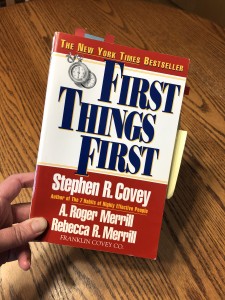
First Things Covey book

First Things First by Stephen Covey with Roger Merrill and Rebecca Merrill 

It seems only right to start my list with this book, since it was such a huge influence at the start of my career and adult life.

“Put First Things First” is one of Covey’s 7 Habits of Highly Effective People, and I’m so glad he dedicated an entire book to this particular habit. This book focuses primarily on priorities, values, and designing our time around what matters most. I read this at a critical time in my career and life, and have referred back to it many times in the decades since.

If you’re looking for a practical, meaningful book on prioritizing and time management, start here.
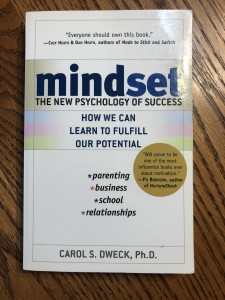
Dweck book

Mindset by Carol Dweck

If you’ve heard of a ‘growth mindset’ or ‘fixed mindset,’ you can credit Carol Dweck. I have probably seen Mindset cited in more books than any other single resource, and for good reason.

Dweck’s groundbreaking research on mindset can change the way we teach, lead, parent, and more. I first read this through my coaching lens, then again as part of a parenting group – both times were profound!

I recommend this book for educators, leaders, coaches, parents, and basically anyone who strives to bring out the best in others.
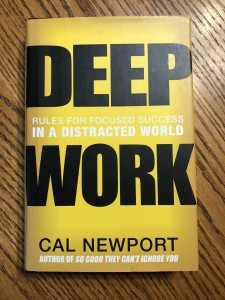
Newport book

Deep Work by Cal Newport

I heard Newport speak at global coaching conference years ago and have read nearly all his books since then. His emphasis on maintaining focus in a world filled with distractions has had a profound impact on how I structure my days.

Newport argues that while we generally may be losing our ability to focus, with practice and dedicated attention, we can strengthen this necessary skill. I love the variety of examples he shares – some dating back decades and beyond – and the solutions they found for focus. I also appreciate his promotion of a deep and meaningful life, whatever that looks like for each of us.

On a side note, if your phone is a big source of distraction for you, you may wish to follow Deep Work with his next (also excellent) book, Digital Minimalism.
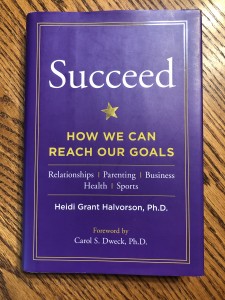
Grant Halvorson book

Succeed by Heidi Grant Halvorson

When it comes to delineating between different types of goals, as well as different types of achievers, Succeed is a go-to resource for me. I wrote my Master’s thesis on the theory of motivation, and I wish I’d had Grant Halvorson’s work to reference at the time!

Her explanation of performance vs mastery goals, as well as the chapter on when to quit, make this book worth its weight in gold. And her exploration into motivation – what helps us and what trips us up – raises it to platinum-level.

Highly recommended for help in goals, achievement, and motivation.
Duckworth book

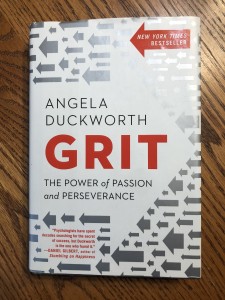
Grit by Angela Duckworth

As you’ll probably gather by this list, I am especially fond of nonfiction that shares compelling stories and examples while also being fully backed by research. Grit also fits this bill, combining two topics that have long fascinated me: passion and perseverance.

Having one or the other can be valuable, but blending the two? You’re unstoppable.

I particularly love the variety of examples Duckworth shares to demonstrate the power of grit – from West Point cadets to parents to athletes to entertainers to CEOs and truly all points in between. Just about anyone could see themselves somewhere in this book.
Fredrickson book

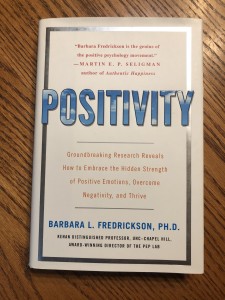
Positivity by Barbara Fredrickson

I was first exposed to the science of positive psychology in general, and to Fredrickson’s work in particular, during my initial coach training intensive in Santa Barbara years ago. I purchased Positivity in a local bookstore while there and devoured it on my flight home.

This very readable book shares evidence-based practices to enhance our well-being, incorporating Fredrickson’s more than 20 years of research. I still often call her ‘positivity ratio’ to mind as I mentally scan through my day.

I have since earned an additional certification in Positive Psychology Coaching, during which Fredrickson was one of our faculty members – a total fan-girl moment for me!
Keller book

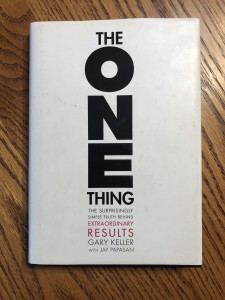
The One Thing by Gary Keller with Jay Papasan

This incredibly practical resource highlights what much of my coaching work is about: Discerning your vision + purpose, then designing your days to honor them as much as possible. In a very readable manner, Keller provides strategies for prioritizing, focusing, and managing time and energy effectively.

I know many people who still refer frequently to the ‘focusing question’ from The One Thing: “What’s the one thing I can do such that by doing it everything else will be easier or unnecessary?”

An excellent resource for clearing away the fluff and focusing on what matters!
Buckingham book

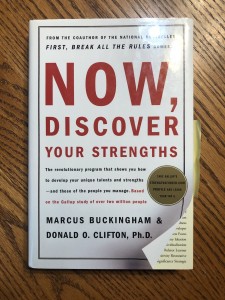
Now, Discover Your Strengths by Marcus Buckingham & Donald Clifton

This book introduced me to two life-changing things: 1) The encouragement to dedicate more time on enhancing strengths than on trying to shore up weaknesses, and 2) the StrengthsFinder assessment (now called CliftonStrengths). When I first read this book over 20 years ago, it reinforced what I had felt for so long but did not have the words or backing to articulate.

I dove head-first into the world of strengths and, happily, I have never emerged. I engage these principles in my own life, in my coaching work, and in the way I initially designed and continue to run my business.

It also was my introduction to Marcus Buckingham’s work, which I have utilized in a variety of ways since, including coaching with some of his team.
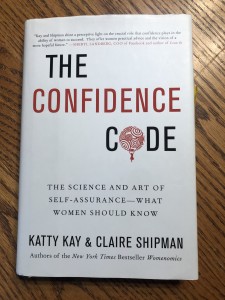
Kay Shipman book

The Confidence Code by Katty Kay and Claire Shipman

Confidence is more than simply walking tall and voicing your thoughts, and The Confidence Code captures its many moving parts more succinctly than most. From overthinking to societal norms to perceived repercussions of failure, Kay and Shipman explore the various barriers that get in the way of confidence – and counteract them with doable solutions.

I would never wish for confidence struggles for anyone, but there’s something comforting in reading how even high-confidence, high-profile leaders experience them from time to time – and also how they emerge out the other side.

My big takeaway: Take action. And action #1 can be reading this book!
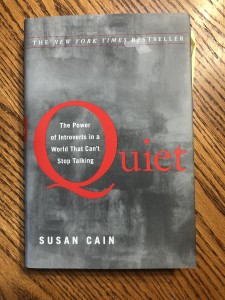
Cain book

Quiet by Susan Cain

I have always tested as an extrovert but could never fully understand why, as I require a ridiculous amount of time alone. I then had a huge aha moment while reading Quiet: I realized that while I may not love huge, loud gatherings, one-on-one or small group interactions fuel me tremendously. Give me a meaningful conversation with a close friend (or even a complete stranger) and I’m on a high for the next 24 hours!

In the years since first reading Quiet, I have referred to its concepts in my coaching work, at networking functions, as a parent, and more.

Hands down the best book on introversion/extroversion I have read to date.
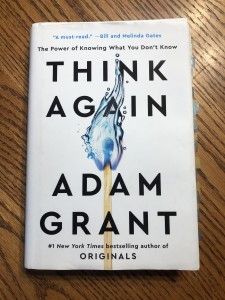
Grant book

Think Again by Adam Grant

This is the newest book here, and although I read it less than two years ago, I have talked about it/shared it/gifted it so much I’d be shocked if it ever fell off my favorites list! Grant shares the importance of questioning and rethinking our beliefs, and recognizing that changing our minds doesn’t mean we’re wishy-washy or wrong.

On the contrary, it can actually symbolize growth.

His discussions on confident humility, psychological safety, and the power of thinking like a scientist have truly changed the way I think!
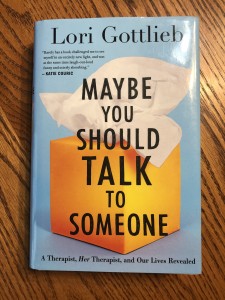
Gottlieb book

Maybe You Should Talk To Someone by Lori Gottlieb

Out of all the books I read in 2019, both fiction and nonfiction, this gem rose to the top. Immediately upon finishing, I wanted to start rereading it!

The structure of this one is unique: Gottlieb writes about her work as a therapist, as well as her interactions with her own therapist. The result is a memoir-esque and heartfelt view of many aspects of the human experience. It’s touching, compassionate, funny, heartbreaking, and pretty much any other adjective I can think of.

I love the emotion evoked by this one, as well as the dialogue it opens up about wellness, care, and mental health.

CH book stack 4

Oh my gosh, was this a fun blog to write! And stressful, as I’m sure I’ll think of others as soon as I hit ‘publish.’ 🙂

Let me know if you’d like to see me briefly recapping these books on video, or if you’d like to see other lists of favorites – I’m always happy to chat about books! I’ll also be sharing my 2022 favorites soon – a couple of which will almost certainly be on a future all-time favorites list – so make sure to stay tuned.

Have you read any of the ones I’ve mentioned here? What books would make your list of all-time favorites? Share some titles in the comments below! 

The Weight of The Undone

Christi Hegstad November 28th, 2022

Every month for the past few years, I have summarized my biggest lessons learned that month.

(I typically share these lists on my blog and LinkedIn as well.)

Back in February, one such lesson was:

“Half-finished projects / tasks are a mental weight.”

I am definitely ready to lighten some of that weight before we ring in 2023! How about you?

This week, schedule a Completion Block.

Look at your goals and to-do list, and identify what you most want to complete before the year wraps up.

Maybe it’s one partly-done project, or 15 little tasks.

Then, pull out your calendar and block a good chunk of time, such as three hours on an upcoming Friday afternoon.

Protect that time like gold – and when it rolls around, use it for the purpose you’ve identified.

I bet you will close out that day – and the year – feeling lighter!

Click here to enroll in the ASPIRE Success Club – Earlybird Rates end next week! 


Outgrowing and Upgrading

Christi Hegstad November 26th, 2022

As I pulled on a t-shirt yesterday, I noticed that it was from a race I completed … in 2008.

My patio furniture, purchased a couple decades ago, looks a little rusty and raggedy.

And I have a couple of cute sundresses that I adore but that no longer fit.

I can’t help but consider the life metaphor here: the activities I’ve outgrown, the routines that have become stale, even some relationships that perhaps no longer fit.

Do I need a life overhaul?

This is the question that springs to mind, dramatic as it is. And after a bit of thought, I don’t believe I need a life overhaul.

I do, perhaps, need some upgrades.

I’m always a bit surprised how luxurious a new pair of quality socks can feel, or how a coat of paint can change a room from drab to delightful.

Simple upgrades but transformative results.

Are you due for some upgrades, too?

If you feel a bit weighed down, ho-hum, or drab, maybe a couple of strategic upgrades are in order. Consider categories such as:

Office supplies

Home decor

Household or personal care items

Clothing

Also take a look at some of the ‘bigger’ life areas and ask a few questions, such as:

How could I add some delight to my daily routines?

What would breathe fresh new life into my career?

What activities, habits, or relationships do I need to rethink a bit?

We are continually growing, evolving, and changing. And if you are an achiever or lifelong learner, you are probably doing so at a fairly rapid rate at times. It’s only natural that, along the way, you might outgrow or need to upgrade in simple and/or meaningful ways.

Consider where you might require an upgrade of some sort, and start simple.

A burst of freshness might be just on the other side!

Join the ASPIRE Success Club or the waiting list for the ASPIRE Bold Goal Academy – enrollment remains open for just a little longer! 

Can I Be Intentional *And* Watch TV All Day?

Christi Hegstad November 25th, 2022

Imagine these two scenarios and see if you notice a difference:

In Scenario #1, you wake up on a Saturday morning feeling a bit sluggish. You think, “I’m going to watch an episode of XYZ Show, then I’ll get to my projects.”

Next thing you know, twelve hours have passed and you’re still sitting in front of the TV.

In Scenario #2, you reach Friday evening and acknowledge that it’s been a rough week. You subsequently declare tomorrow “TV Day” and decide to do nothing all day other than lounge on the couch and enjoy a movie marathon.

Next thing you know, twelve hours have passed and you’re still sitting in front of the TV.

Do you notice a difference? More importantly, would you feel a difference at the end of these days?

Same Action, Different Experience

The actions in both scenarios are the same: Couch, TV, twelve hours passing.

But I bet you’d feel quite different at the end of Scenario #1 than you would at the end of Scenario #2. Especially if you’re an achiever.

This is a simple example demonstrating the difference between being intentional – or not – with your time.

Intentionality has been our focus in the ASPIRE Success Club this quarter. When we’ve discussed what ‘living with intention’ actually means to us, words like ‘purposeful’ and ‘deliberate’ and ‘mindful’ have risen to the surface.

Being intentional means deciding how to engage your time. It involves giving thought and consideration to your actions. On the flip side, not being intentional typically means running on autopilot, letting circumstances dictate your actions, or – like in Scenario #1 above – reaching the end of the day or week feeling like you had no agency over it, thus have little to show for it.

Intentionality can often be the difference between fulfillment and frustration.

Living With Intention

So, how can we live with greater intention? A few ideas to get you started:

Map out your week. On Friday afternoon or Sunday evening, map out the week ahead, taking care to address your top priorities. (The Weekly R+P Session can help.)

Set a daily intention. As you look at your schedule each morning, choose a word that represents who and how you want to be throughout the day. For example: Energized, purposeful, productive, calm. Call your intention to mind as you go about your day.

Decide in the moment. Essentially the same as the previous idea, only on a moment-by-moment basis. Who/how do you want to be during the meeting you’re about to enter? The call you’re about to make? The conversation you’re about to start?

How else do you increase intentionality in your work and life? Share your ideas below!

Join the ASPIRE Success Club or the waiting list for the ASPIRE Bold Goal Academy – enrollment remains open for just a little longer! 

Saying ‘Thank You’ Without Words

Christi Hegstad November 24th, 2022

In the spirit of Thanksgiving, you might be offering thanks more today than usual. Wonderful!

In addition to saying the words, how else do you demonstrate gratitude?

A few ideas for saying ‘Thank You’ without words:

Active listening: Remove distractions and give someone your full attention.

Act of service: Take care of a routine chore that someone else normally does.

Unexpected delight: Bring a surprise cup of coffee or a favorite treat.

Eye contact: Feeling seen and/or heard can feel like a gift in our noisy world.

Handwritten note: I guess this requires words, but a card in the mail is such a rare treasure!

What other ideas come to mind?

Let’s plan on engaging them today and throughout the year!

Join the ASPIRE Success Club or the waiting list for the ASPIRE Bold Goal Academy – enrollment remains open for just a little longer! 


Gratitude As A Professional Coach

Christi Hegstad November 23rd, 2022

Like many of you celebrating Thanksgiving this week, I feel especially grateful for the many blessings in my life. Family, friendships, home, health – the list is infinite!

I also feel a special kind of gratitude for the work I do and the people I work with. As a Professional Certified Coach and the owner of a coaching firm, I have the privilege of helping people work with meaning and live with purpose every single day.

A few notes of gratitude specifically to my coaching colleagues, clients, and connections:

Thank you for being willing to explore deep questions and engage in meaningful discussion. These types of conversations, and the actions that follow, are changing the world.

Thank you for your trust in the process, in yourself, and in me. I am honored by your vulnerability and thankful for the safe space we create.

Thank you for letting one another know we’re not alone. In the ASPIRE Success Club, for example, “Oh my gosh, I thought I was the only one!” is a phrase we hear a lot in our meetings! Your sharing bolsters belonging and builds community.

Thank you for being lifelong learners. Your willingness to grow helps all of us grow!

Thank you for your generosity of spirit. You are truly some of the kindest, wisest, most hilarious people I know.

Thank you to my coaches, of whom I have hired many over the years. You challenge me, inspire me, and continually motivate me to elevate my coaching game.

My work and life are infinitely better because of all of you, and I am grateful.

Join the ASPIRE Success Club or the waiting list for the ASPIRE Bold Goal Academy – enrollment remains open for just a little longer! 

The Making Of A Favorite Book

Christi Hegstad November 22nd, 2022

What are some of your favorite books?

What, specifically, makes them your favorites?

I’ve been giving this question a lot of thought lately. In large part, because I plan to share my favorite nonfiction books of all-time shortly. As I weed through the many possible contenders, I’ve identified five qualities that move a book from ‘excellent’ to ‘favorite of all time.’

My main criteria:

Prompts a powerful reading experience. This may mean I felt completely immersed in the book, it was hard to put down, or I would even forego other responsibilities in order to keep reading. (‘Cereal for dinner tonight, everyone!’)

Leaves a lasting impression. I might enjoy a book but barely remember it a year or two later. On the other hand, I read one of my nonfiction favorites as a freshman in high school! That’s staying power.

Makes me feel something. I’m being vague on purpose here because a specific emotion isn’t required – just some emotion. I need to feel the book in some way for it to make my favorites list.

Changes or challenges my thinking. I love it when I’m reading a book and think, “Wow, I never thought of that before.” If it also prompts me to improve or enhance my behavior in some way? Even better.

Sends me down a rabbit hole, in the best way. When I read Think Again by Adam Grant, for example, I was also looking up TED Talks he referred to and seeking out biographical information on people he mentioned. (Spoiler alert: You’ll see Think Again on my all-time favorites list!)

Many books fulfill one or some of these criteria. My favorites tend to fulfill all five. Impressive!

Does your criteria match any of mine? What else would you include?

Don’t Forget The Delight

Christi Hegstad November 21st, 2022
A few days ago, I posted a blog about weird goals.
Weird goals I’m currently pursuing, ones I’ve set in the past, unexpectedly poignant outcomes from those odd + random goals.
It was a fun blog to write, and it reminded me of something that we, as achievers, can forget:
Sometimes doing something just for the fun of it is reason enough.
This week, do something purely for the delight.
Maybe it doesn’t check any boxes off of your to-do list.
It might not noticeably move you closer to your big vision or Bold Goal.
But maybe ‘just for the joy’ can sometimes be the purpose, in and of itself!
Join the ASPIRE Success Club or the waiting list for the ASPIRE Bold Goal Academy – enrollment remains open for just a little longer! 

What I Do When I’m Floundering

Christi Hegstad November 20th, 2022

I once drew a picture in my journal to capture how I was feeling at the moment.

The picture showed me in a canoe, in the middle of a lake, without any oars.

Behind me was the ‘shore of my past.’ To the sides, the roles, people, and events of my present.

Ahead of me … well, I couldn’t tell. And that’s what was bothering me most.

That picture (all drawn with stick figures of course 🙂 ) turned out to capture it perfectly.

Rowing Without Any Oars

Sometimes, I feel like I’ve got it together: I’m completing projects, connecting with others, honoring my priorities, following through on my menu plans.

Other times, I just don’t.

The word I most often use to describe those latter times: Floundering. I feel rudderless in the middle of the water. Sometimes I even feel like I’m in the water, flailing wildly and trying to get my bearings.

I don’t enjoy this feeling of floundering. I am a planner, at times with a side of control freak thrown in, so not having a clear direction nor a way to get there is a very uncomfortable place for me to be.

Can you relate?

Getting My Bearings

Just because I don’t like it, however, doesn’t mean I’m not going to experience it from time to time. Intellectually, I know that discomfort nearly always accompanies growth, which I love and which is a core value of mine.

But in those floundering moments, all I want is to get un-floundered! Here are some practices I’ve found helpful in those times:

Ask ‘What If’ Questions. Specifically, ones that help envision possibility: What if I had no limits and could do anything? What if everything turns out beautifully? What if I’m actually right where I’m supposed to be?

Review The Wins. Here’s where a Success Journal or Celebration of Triumphs can come in extra handy. Written documentation can remind you of your awesomeness when your mind doesn’t seem to want to go there.

Speak, Selectively. While my natural tendency during difficult times is to retreat inward, I’ve found that a conversation with a carefully chosen person – often my coach, a fellow mastermind member, or a close friend – can make all the difference.

I also actively, consciously remind myself that this won’t last forever, that I won’t feel this way forever. Again, I know this intellectually, but sometimes I need the intentional reminder.

Finding My Oars

I’ve learned that, ready or not, periods of floundering are going to appear from time to time. And that sometimes, much to my dismay, I just need to be in the floundering for a while – sitting in the canoe, oarless, in the middle of the lake, and taking some deep breaths.

Because as much as I want to immediately take action and ‘fix it,’ that can often be akin to paddling frantically with just one oar – aka, spinning in circles.

Life has shown me every time, every time, that I’ll eventually find my way again. If you’re reading this right now, life has undoubtedly shown you that, too.

Eventually, the shore ahead becomes clear, the wind shifts in our favor, the oars appear.

Until then, I’ll turn to the practices above to help me make the best of it. And I’d love to add some more – so please share what helps you when you’re floundering, too!

Did you know you can now join the ASPIRE Success Club for a 3-month term instead of the full year? Come and see what we’re all about – enroll today!


The Joy Of Weird Goals

Christi Hegstad November 19th, 2022

Within the next few weeks, if all goes according to plan, I will post my 1000th blog.

And unless you are reading this particular blog, you – and most of the world – will probably never know or care.

I am also on a quest this season to find a new favorite Christmas album.

And I can’t even begin to tell you the goals I have around Wordle!

These are not my Bold Goals. In fact, they don’t even appear on any list of goals for the quarter or year.

The only way I can describe them is as my weird goals, and I’m so happy I have them!

What Makes Them Weird?

If you’ve coached with me or attended any of my goal-setting workshops, you can probably see these goals don’t meet most of my typical criteria.

They’re kind of random, not necessarily linked to a greater vision, and mostly they popped up without much thought.

In that regard, they’re weird goals for me.

But I always like to intersperse a few weird goals with the bold and meaningful ones.

And my weird goals still have a purpose: They’re fun. Whenever I think, ‘Why on earth am I doing this?’ my answer is typically, ‘I don’t know, but I’m having a ball!’

I’m not using ‘weird’ as judgment of any kind – just that they’re out of the ordinary, for me!

Why Even Bother?

Sometimes, as achievers, we need to remind ourselves that doing something purely for the joy is reason enough.

But also, sometimes weird or random goals turn out to have profound benefits, too.

For example, I decided to blog every day for a month to move that 1000th blog a bit closer. As a result, I am sharing content every single day that will hopefully help someone, somewhere in the world. My over-thinking (and often, over-editing) has decreased considerably. I’m more frequently writing from the heart.

All wins, in my book.

As another example, I once decided to record one ‘delight’ per day, just for fun. Three years later, I am still keeping my Daily Delights list, and I can’t even begin to tell you how much this has supported my mindset and overall joy.

Sometimes those weird, random goals turn out to be super meaningful after all!

Setting New Goals

I’ve already started helping clients set their goals for the new year, and I’m sure you’ll see more goal-related posts in the near future, too. In addition to the goals that clearly move you toward your future vision, also ask yourself:

What sounds fun?

What lights me up?

What would I love to celebrate, even if no one else knows, cares, or ‘gets it’?

And when you ask yourself, ‘What’s the purpose of this weird goal?’ perhaps let a response of ‘For the joy of it’ be enough. 🙂

We love all kinds of goals in the ASPIRE Bold Goal Academy – come and join us! 


Website Design by Happy Medium