Tag Archives: books

My Favorite Books of 2017

Christi Hegstad January 3rd, 2018

When you are an avid reader, you often find yourself in the midst of big, deep, difficult questions, such as:

Can I let go of all other responsibilities today and just read?

Do I stop buying books, or do I start buying more bookshelves?

What on earth am I going to read next?

Other people will also ask you hard things, including the most challenging of all for a voracious reader:

What’s your favorite book?

I typically respond to that question with various questions of my own: What genre? Favorite as in inspiring or as in a gripping story or as in a thought-changer? Classic or contemporary? etc., then offer a top ten list of sorts. But at the end of each year, I do try to generate a short-list of favorites read that year – hence today’s blog.

A few disclaimers:

* This list includes only books I read for the first time in 2017 – so the excellent books we discuss in the ASPIRE Success Club, for example, are not included.

* I utilize a highly-specific and technical rating system to generate this list, involving a handwritten book journal and foil stars. 🙂


IMG_5295

* I’m only including nonfiction books (which is what I mostly read) on this list, however I will share my fiction faves later this week on Instagram. (Side note: If you’re a book lover, let’s connect on Insta! I post most books I read [except the ones I dislike] along with a brief description of my thoughts and takeaways.)

OK, enough chit-chat – let’s dig into my 3 favorite nonfiction books of 2017:

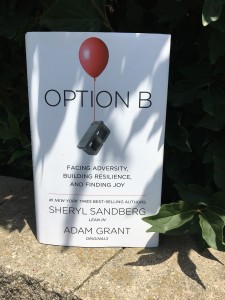
Option B by Sheryl Sandberg and Adam Grant (Penguin Random House, 2017).

If you ask someone what to read next, how often do you expect them to recommend a book about navigating grief? Since reading Option B, I have actually done this often. Powerful, practical, and beautifully written, this book is a terrific resource for anyone who has ever experienced adversity or loss, or who may experience it in the future. It’s also invaluable for those wishing to support others through difficult times, such as family members, leaders, friends, and coworkers.

You can read my experience (and it truly was an experience) with this book here.

IMG_2500

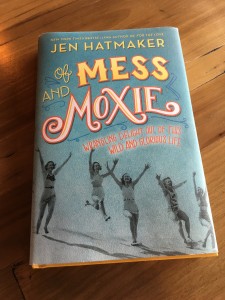
Of Mess & Moxie by Jen Hatmaker (HarperCollins, 2017).

When we discuss books in the ASPIRE Success Club, members frequently make two points: 1) “I wish I had read this when I was younger,” and 2) “Until reading/discussing this book, I thought it [whatever ‘it’ the book addresses] was just me.” I experienced both of these when reading this hilarious, heartwarming, insightful, and affirming book!

Hatmaker has the unique ability to make the reader laugh, cry, and say, “Oh my gosh, YES!” all within the same page. I actually didn’t highlight much in this one – it read so much like a story! – but one of my favorite lines:

“There is no scarcity in creativity… There is no such thing as too much wisdom and literature and story and craftsmanship. There is room for you.” (p99)

IMG_4512

The Little Book of Hygge by Meik Wiking (William Morrow, 2017).

A surprise hit! I’ve been somewhat obsessed with Denmark ever since reading about its happiness factor in Dan Buettner’s book, Thrive (one of my 2012 favorite books, actually – learn more here). This quick little book shared the basics of hygge, marked by things such as candles, books, music, cozy quilts, warm socks. In a nutshell, “Hygge is about giving your responsible, stressed-out, achiever adult a break. Relax. Just for a little while” (p105). That’s exactly what I did when reading this book, and the feeling continued well after I closed the back cover.

You can read my reaction here (if the link doesn’t get you there, scroll down my Instagram feed to March 10, 2017).

IMG_5296

As a literacy advocate, one of my favorite things to hear (and a big reason why I post books so often on Instagram) is someone saying they read a book because of my recommendation. If this list prompts you to read something new, please let me know! And feel free to share YOUR top books of 2017 below or on Instagram or Facebook. Happy Reading, friends!

Want to see my favorite books from the past several years? You can find them by year: 2016, 2015, 2014, 2013, 2012. Join us for incredible book discussions and much more in the ASPIRE Success Club!


The Secrets To Being So Good They Can’t Ignore You

Christi Hegstad September 29th, 2017

Two reasons in particular drew me to Cal Newport’s book, So Good They Can’t Ignore You:

1. His more recent book, Deep Work, was one of my 3 favorite books read in 2016. (FYI, I read a lot of books.) I had the privilege of hearing Newport speak at a coaching conference that spring and was impressed with his knowledge, ethic, and sense of story.

2. I knew the title of this book came from a line by Steve Martin, one of my all-time favorite actors (not to mention, banjo players). I figured any book inspired by the incomparable Martin had to be pretty amazing!

I was not disappointed.

I was, however, challenged, and in a way that I have been challenged for the past 18 months. I’ll get back to that in a moment.

The Overarching Premise

Newport makes his thesis clear before his book even hits page 1. “The conventional wisdom – follow your passion – is seriously flawed,” he writes in the introduction. “It not only fails to describe how most people actually end up with compelling careers,” he goes on to say, “but for many people it can actually make things worse: leading to chronic job shifting and unrelenting angst when…one’s reality inevitably falls short of the dream.”

What? Aren’t we supposed to do what we love?

Not according to Newport. But fortunately he doesn’t just tell us what not to do; he offers an alternate plan of action, too. A couple of his suggestions:

Be so good they can’t ignore you. In an interview, Charlie Rose asked Steve Martin his advice for aspiring performers, to which Martin replied:

What they want to hear is ‘Here’s how you get an agent, here’s how you write a script’…but I always say, ‘Be so good they can’t ignore you.’

And how might we go about doing that?

Develop your skills to mastery level. Shift your mindset to one of a skilled craftsperson. Don’t just practice, but engage in deliberate practice – the type of practice that stretches your skills and requires focus, concentration, and intentional effort.

That last part is significant: Many of us mostly practice what we already know because competence feels nice. From psychologists like Anders Ericsson, however, we’ve learned that mere practice isn’t enough to reach a level of mastery. We must practice deliberately, challenging ourselves and continuously stretching beyond what we know, which is often unpleasant and unenjoyable but massively skill-building.

Establish a sense of control. Autonomy goes a long way toward professional development and career joy. “Giving people more control over what they do and how they do it,” writes Newport based on his research, “increases their happiness, engagement, and sense of fulfillment.”

If you’re an employee, ask yourself where you have control in your profession. (Side note: “Nowhere” is an unacceptable answer. If nothing else, you always have control over your attitude, effort, and personal growth.)

“Think Small, Act Big.” This still has me spinning a bit. Perhaps since some of my frequently-used hashtags on Instagram and Twitter are #dreambig #startsmall!

But the story Newport offers in this section, about a Harvard biology professor named Pardis Sabeti, is perhaps my favorite in the entire book. She is an incredible example of someone who connects her work to a greater purpose, and she is changing lives – and the world – as a result. “Her happiness comes from the fact that she built her career on a clear and compelling mission,” writes Newport, “something that not only gives meaning to her work but provides the energy needed to embrace life beyond the lab.” She is a biologist, teacher, guitar player, volleyball player, and more. Her mission brings purpose to her days and energy to her life in a way no supplement could, and it allows her to work with enthusiasm and joy in a very demanding, often high-stakes position.

Accepting The Challenge

Newport, as well as my own research and book writing in the past 18 months, has challenged one of the foundations on which I built my business nearly 15 years ago – something I’ll share more about at Spark. His theories are valid, based in sound research, and explored through wonderful stories of musicians, athletes, business leaders, farmers, and everyone in between. So Good was both enlightening and entertaining to read.

So how might you apply some of these learnings to your own work and life? My favorite part of the book (aside from the stories, like Pardis Sabeti) is, interestingly, the conclusion: Here, Newport takes what he learned through his research and applies it to his own experience. While still a work in progress – as we all are – making shifts in his daily actions, focus, and mindset have impacted his life experience in very insightful ways.

Now it’s your turn: How can you bring more meaning and growth into your own work experience? How might you become so good they can’t ignore you? Share your ideas below or on Facebook, Instagram, and Twitter! And to create a full action plan around your core values and meaningful work, be sure to join us for Spark – limited seats left!

What If You Became 10% Happier?

Christi Hegstad April 4th, 2017

Many years ago, when my company was in its infancy, I hired a coach with extensive business experience. He had reached the pinnacle of success in the corporate world, positively influencing the lives around him along the way. A highly impactful leader, dedicated family man, and respected professional, he switched gears later in life to coach others to similar success. I was thrilled to have such a notable partner in my growth.

From our very first meeting, however, I became rather frustrated. It seemed every problem I posed led to a similar response from him: Have you meditated on that? (No.) Have you meditated today? (No.) What might you learn from a period of meditation? (Wha?!)

“I don’t mean any disrespect,” I finally responded, “but I’m really looking for practical business solutions here.”

Ever so patient with me, he asked if I admired what he had accomplished both professionally and personally, and of course I did. “The one constant through it all,” he shared, “was my meditation practice.”

Bigger Lessons To Learn

I’ll share more about this experience in an upcoming article (working title: Meditation For Those Who Resist Meditation 🙂 ), but I offer this now because I can fully relate to Dan Harris’ initial skepticism of meditation in his book, 10% Happier.

Throughout the chapters, Harris – a news anchor with shows like Nightline and Good Morning America – expresses his skepticism, and at times outright disdain, for various practices and teachers of those practices.  As his story unfolds, however, his skepticism turns to possibility and even embracing of the practices he vehemently opposed earlier. Although I laughed out loud in parts (he’s a terrific storyteller), I resonated with pieces of his uncertainty and appreciated his openness in the struggles he endured on his own “path to enlightenment,” if you will.

The book is largely about meditation. Because of his professional role, Harris had the opportunity to connect with people like Eckhart Tolle, Deepak Chopra, and the Dalai Lama to gain as many viewpoints as possible on living mindfully and incorporating meditation into the everyday. While Harris’ path, and in many cases his points of view, differ greatly from mine, I took away three significant lessons from his experience:

1. Release Judgment.

Harris admittedly has preconceived judgments about nearly everyone he interviewed, it seems, and more often than not he was proven wrong. Where do you tend to judge people based on how they look, what you’ve heard, or the way they carry themselves? A great component of mindfulness involves the practice of removing preconceived judgments and allowing life to flow. Your greatest teacher might be the person you’re resisting meeting.

2. Embrace Mindfulness.

Even if you’re not actively practicing meditation ‘on the mat,’ you can take what one of Harris’ interviewees called purposeful pauses – short mindfulness breaks throughout the day. Take advantage of moments while driving, walking, or waiting for your computer to boot up to pay attention to the feel of the sunshine coming through the window or the depth of your breath.

3. Detach, Detach, Detach.

I can say, without a doubt, this is a lesson I am here to learn. (Repeatedly.) I liked Harris’ take: “Striving is fine, as long as it’s tempered by the realization that…the final outcome is out of your control. If you don’t waste your energy on variables you cannot influence, you can focus much more effectively on those you can.”

The Side Effects Are Worth It

Meditation and mindfulness practices have been linked in research to numerous benefits in terms of health, longevity, relationships, success, and more. Learning to pause, quiet the mind, and respond rather than react can also lead to greater compassion and, as Harris points out, “Compassionate people tend to be healthier, happier, more popular, and more successful at work.” Nice!

Harris navigated quite a journey in uncovering the content of this book, from the aforementioned interviews to attending a silent retreat to exploring his own challenges in therapy. His fear that becoming mindful and empathetic would “soften his edge” or make him less successful in the news world were valid concerns, and I appreciated how those experiences unfolded for him.

If you are a meditation/mindfulness practitioner, his perspective may enlighten you to what people on different paths may feel. And if you are skeptical yourself, this book might show you how mindfulness, detachment, meditation, and other growth practices can impact all aspects of your work, leadership, and life – as well as those around you.

“The point of mindfulness was to short-circuit what had always been a habitual, mindless chain reaction… Mindfulness represented an alternative to living reactively.”

10% Happier by Dan Harris (HarperCollins, 2014).


Creating a Miraculous Life – One Morning at a Time

Christi Hegstad March 23rd, 2017

“Two months ago, if you had told me I’d become a morning person, I would have laughed out loud,” a client recently shared. She then paused, and I realized she was fighting back tears with what she said next: “My new morning practice has changed everything: my work, my productivity, how I parent, how I feel about myself. It has transformed my life!”

She is one among many clients and ASPIRE Success Club members sharing this transformation. What a difference a day – or just a morning – makes!

When your alarm rings in the morning, what are the first thoughts to enter your mind? What actions do you take immediately upon waking to set the tone for your day? Do you typically wake up like a kid on Christmas – or like a person wishing for a much more generous snooze alarm?

I’ve written extensively about my morning practice (like this Huffington Post article) and, though originally developed somewhat out of necessity, I have found it to be one of the most meaningful parts of my day. So I was thrilled to discover Hal Elrod’s book, The Miracle Morning, last year and have spent the first quarter of 2017 discussing concepts from it and other resources in ASPIRE.

Elrod’s Miracle Morning consists of 6 components, or SAVERS: Silence, Affirmations, Visualization, Exercise, Reading, and Scribing (writing). He describes his daily process in fair detail and encourages readers to adopt something similar, whether you dedicate a full hour or just six minutes to the routine.

Since I already had my morning practice firmly in place when I discovered this book, my takeaways might prove a bit different than other readers’:

Say ‘NO’ to Mediocrity.

In many areas of life, we tend to settle – whether by habit, limited thinking, or fear of the unknown that comes with trying something new. “Your entire life changes,” Elrod reminds us, “the day you decide you will no longer accept mediocrity for yourself.” Don’t settle.

Say ‘YES’ To Purpose.

While the actions each morning are important, I love how Elrod focuses more on the reasons behind them: To live a life of intention and purpose. Focusing on personal development, committing to growth, and beginning each day positively pulled him out of inconsistent results and a less-than-stellar lifestyle.

Take Responsibility For Your Life.

We cannot control everything that happens to us, as Elrod well knows: He was hit head-on by a drunk driver, suffered permanent brain damage, and actually died for six minutes. We can, however, choose our response to everything that happens. “It begins with accepting total responsibility for every aspect of your life and refusing to blame anyone else,” he writes. “The degree to which you accept responsibility for everything in your life is precisely the degree of personal power you have to change or create anything in your life.”

The Miracle Morning offers practical, actionable ideas you can implement immediately to begin changing the course of your work and life. Elrod’s powerful personal story, encouraging support, and ability to connect small daily actions to the bigger topics of meaning and purpose make this a truly worthwhile read. I highly recommend reading and implementing. Miracles await!

Website Design by Happy Medium